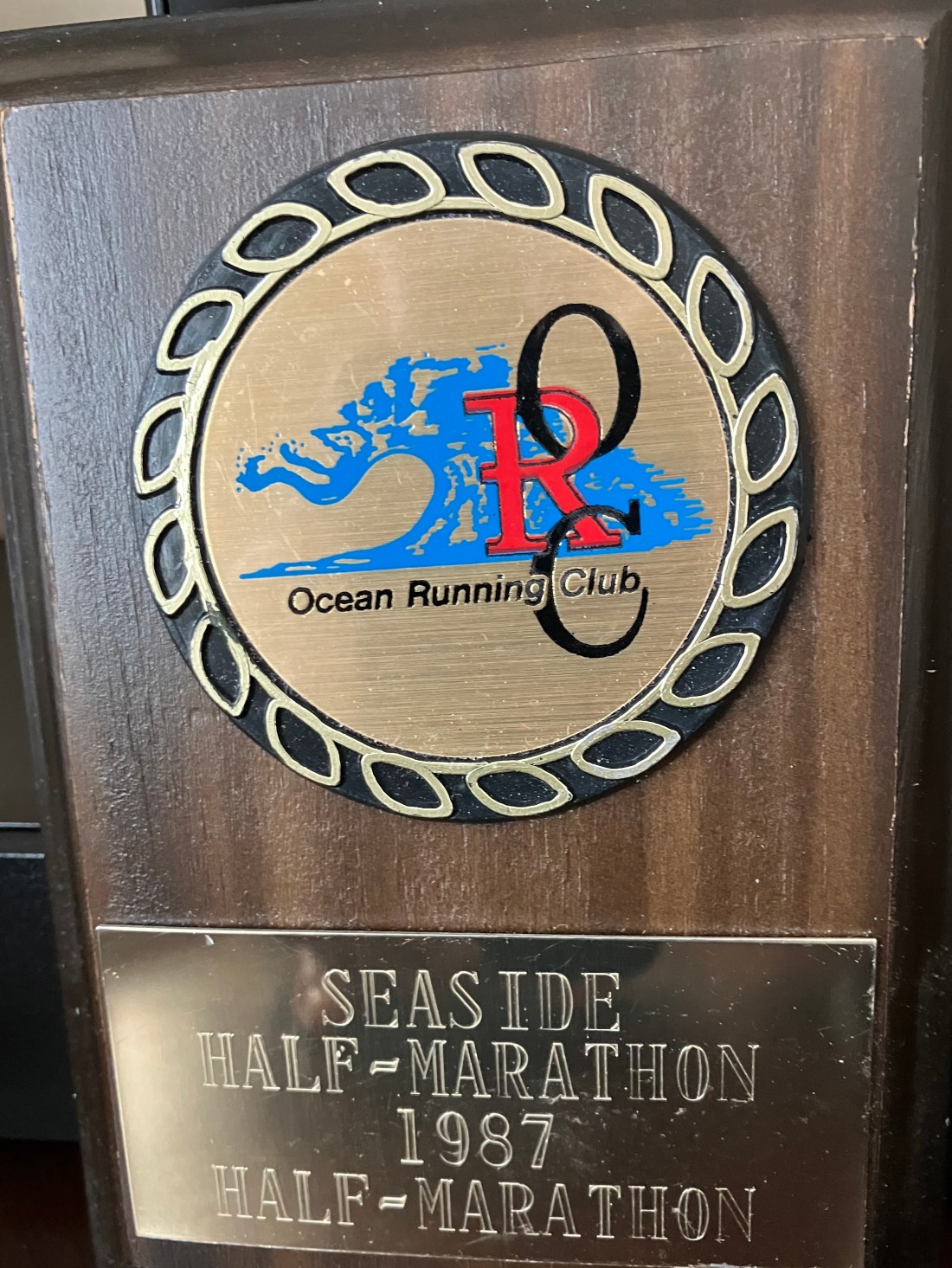
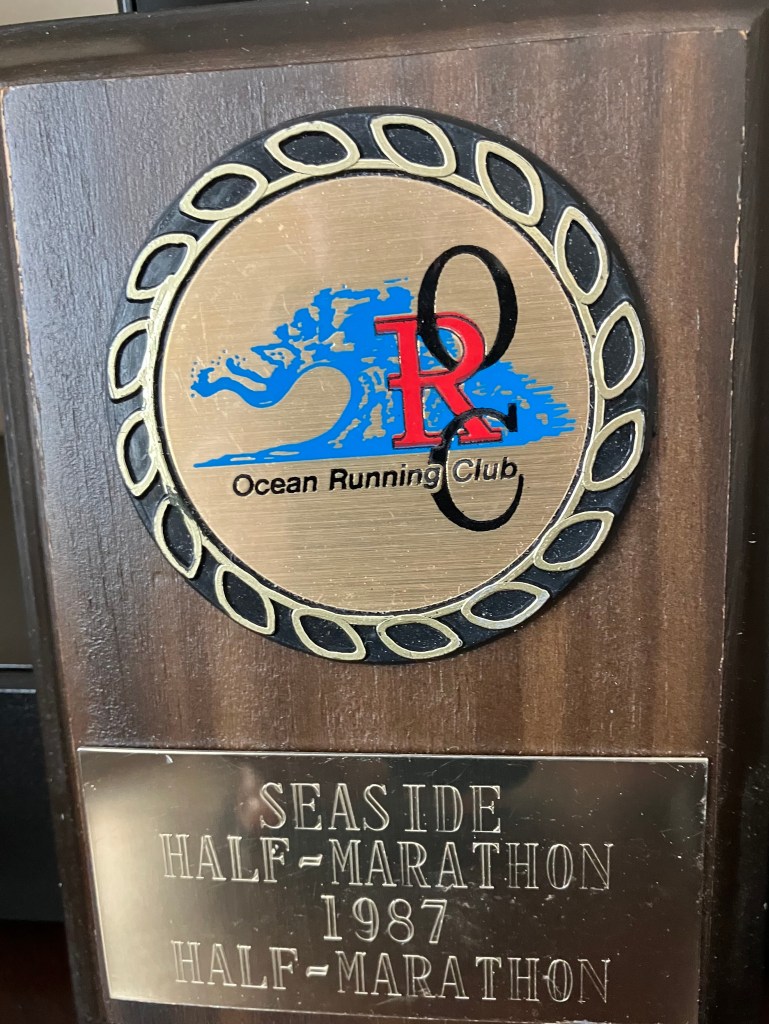
1987 Seaside Half Marathon

Featured

By Ernest JosephOctober 1987

As part of my preparation for ’87 NYC Marathon, which was my second; the Seaside Half Marathon on Sunday October 18th was on my schedule, two weeks prior to the marathon which was on Nov. 1st.


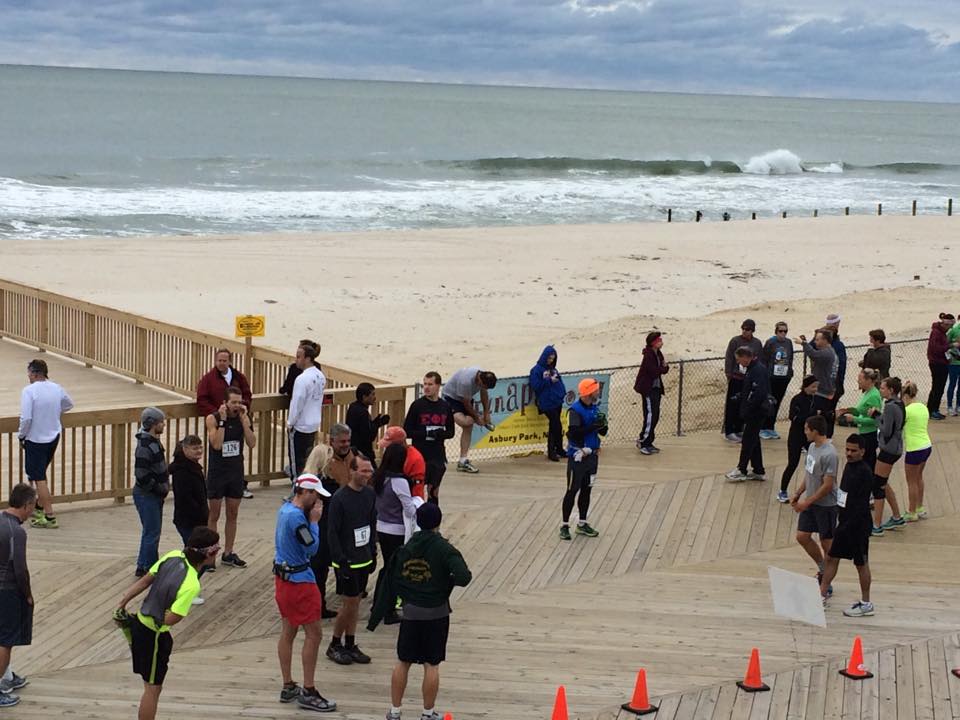
In its 10th year of running, organized by Ocean Running Club of South New Jersey; it is a fast, flat road race with beach and oceanfront views along the Jersey boardwalk and into Island Beach State Park.


Not to be confused with the event by the same name in Seaside, Florida, this race is run by many participants with an eye on gearing up for fall marathons in the New York and New Jersey areas.
The first running of this race was in 1976, organized by ORC. The Half Marathon is flat & fast. The newer course now takes you from beach to bay! Starting at the famous Beachcomber Bar & Grill, runners run south into Seaside Park with a few turns through the beautiful residential neighborhood before running alongside the bay. Runners will then go north through the neighborhood, loop back to the boardwalk and run to the north end of Seaside Heights until back at the Beachcomber. The runners then repeat the same loop twice.


My running background:
In March of 1986, I had finally committed to not only start running to keep fit, but train for my first ever Marathon in fall of ’86! Looking back, to start running at any distance in March leading up to running 26.2-mile race in first week of November, eight months later sounds crazy now, right? But I thought it was doable and created my own training plan.


Between March and April, I started running on Wayne Valley high school track, slowly increasing my distance up to 5 miles, running on the streets. My first race was New Jersey Waterfront 5 miler in Jersey City NJ on May 4th. I finished in 00:40:04 @ 8:01 min. pace.


Between May and August, I ran seven more races ranging between 5 milers and 10Ks: averaging pace between 9:18 min. to 7:08 min. pace.


Then on Sept 21st, I ran my first half marathon (Fitness Day half in Wayne, NJ) in 1:48:13 @ 8:16 min. pace, followed by 18-mile race in Long Beach Island, NJ on Oct. 12th in 2:23:11 @ 7:57 min. pace.


Finally on Nov. 2nd, 1986, I ran my first ever Marathon in NYC in 4:10:01 @ 9:33 min. pace.

Race:
I arrived at 8 am for the 9 am start. The weather was perfect: low 50s (F), slight ocean breeze, moderate cloud coverage.


Based on my training, I felt I should shoot for 1:45:00 half marathon @ 8:00 min. pace on this flat and fast course.


The race began along a long stretch of boards, headed south. I went out fairly quickly @ 7:30ish pace for the first 2 miles, but I felt like I was keeping pace well. The southward stretch along the boards ended with a loop through the streets and continued back north along that same boardwalk. At this point, I settled into my planned pace of 7:45 min. pace.

I finished first loop of the course and headed down the boards once again for the second half of the race. At this halfway point, 7:45 min. pace felt comfortable. With last 3 miles remaining and feeling very comfortable, I decided to push the pace to the finish line.
I finished in 1:41:00 @ 7:43 min. pace.
Post-Race:
Although my goal was to finish in 1:45:00, I was able to finish 4 minutes faster, thanks to perfect weather condition. I felt I was ready to run NYC marathon, breaking 4:00:00 hour barrier for the first time.


Two weeks later on Nov. 1st, I finished NYC marathon in 3:59:09 @ 9:08 min. pace. Mission accomplished!
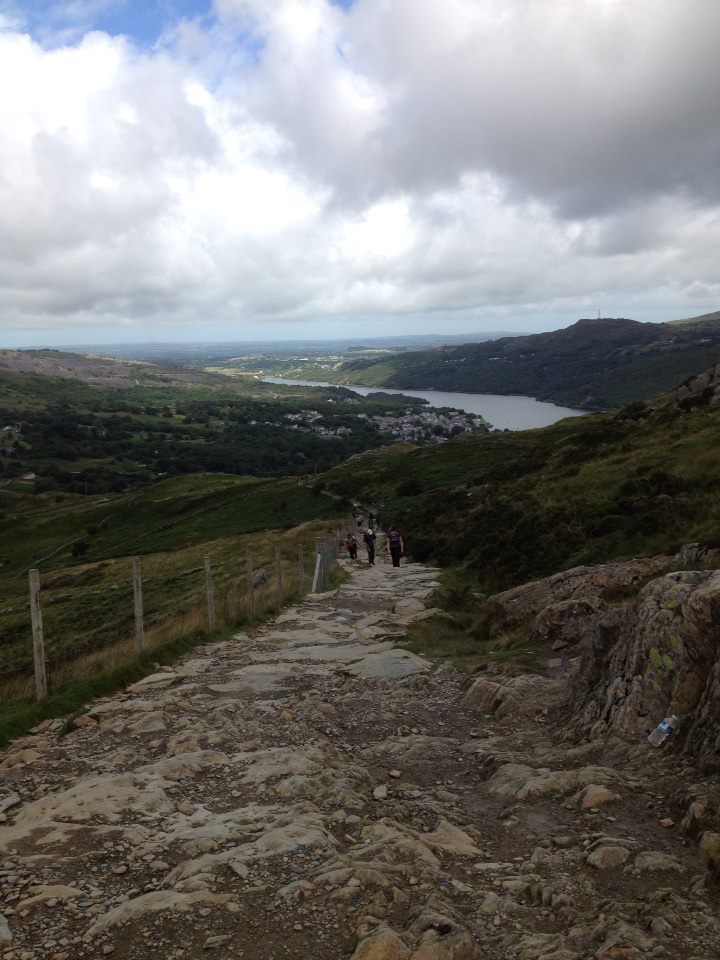
Dringiad Yr Wyddfa – Climbing Snowdon

Featured

– by Ernest Joseph

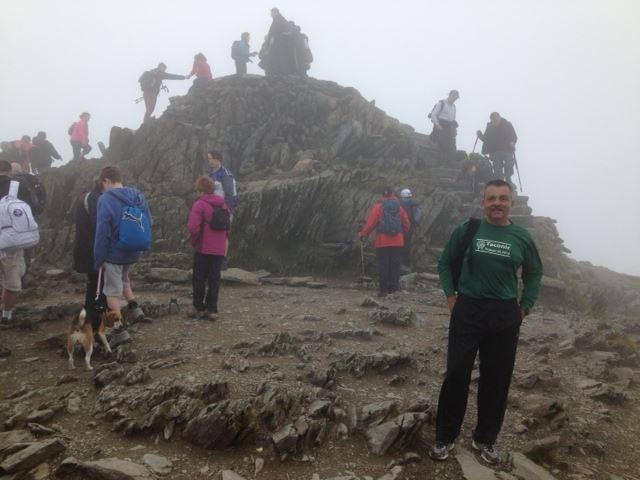
at the Snowdon summit

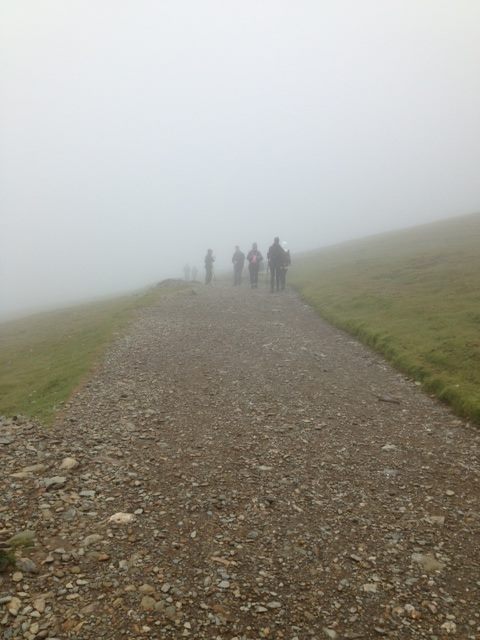
When I woke up on August 18, 2013 in the village of Llanberis, Wales; and look up to see if I can see the top of Snowdon Mountain, I was happy to see the summit clearly! Although months between June – August are the best tie of the year to visit Eyri National Park (Snowdonia), the summit can still be under cloud on seemingly clear day at sea level.


The name ‘Snowdon’ means ‘Snow Hill’ and snow can often be seen covering parts of the mountain. Whilst the Welsh name ‘Yr Wyddfa’ translates to ‘Burial Place’, which may refer to the fact that Snowdon is said to be the mythical resting place of Rhitta Gawr – the giant killed by King Arthur.


Snowdon is the highest mountain in Wales and England at 1085 meters (3560 feet) and the highest point in the British Isles outside Scotland. I was a frequent visitor to this region of Wales from 2010 to 2016. My work at Siemens brought me to Llanberis frequently.


During this period, my sight was always on climbing to the summit of this mountain. Finally on August 18, 2013, I had my best chance to climb.


There are six different paths that lead to the summit of Snowdon. I decided to take the Llanberis Path. The Llanberis Path is the longest and most gradual path to the summit and offers fantastic views of the surrounding area. It follows close to the line of the railway, and being the easiest ascent, it is the route used by the annual Snowdon Race. But don’t let the “easiest ascent” fool you. The Snowdonia National Park Authority classifies Llanberis Path as a hard and strenuous route.


The section of the Llanberis Path above Clogwyn station has long been called the “Killer Convex”; in icy conditions, this convex slope can send unwary walkers over the cliffs of Clogwyn Du’r Arddu. Four people died there in February 2009.


The starting point of the path is Snowdon Mountain Railway Station. The distance to the summit and back is 9 miles. Total ascent is 975 meters (3,200 ft.), and the grade is 14.1%


While I was never able to coordinate my trip during middle of July when the famous Snowdon race takes place, I was determined to run and not walk the entire distance.


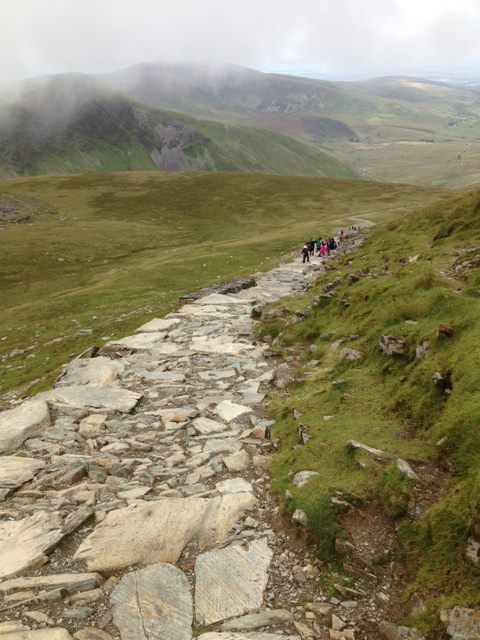
The start is a gentle rise up a country road, following the snaking road; leading to the proper trail. The gentle incline along the mountainside continues for a good few miles. This allowed me to enjoy and take in the jaw-dropping panoramas of the Welsh valley. This gentle ascent continues past the Half-way House to mark the halfway point of the ascent.


The terrain changes as soon as you reach the final quarter of the peak where I was faced with a sudden sharp rise at Allt Moses.


While this climb is relatively brief, it’s still very steep and is guaranteed to get those legs burning! The gradient does begin with some stone steps, but for the rest of this segment I was plodding along the eroded and gravelly path. Had to be cautious here as the rocks were quite loose.
The incline briefly relents at Clogwyn Station, where I was treated to a short flat segment under the railway bridge. I continued the climb and made sure that I don’t stray close to the edge since the drop gets incredibly steep. This is best known as the Killer Convex; a notoriously dangerous segment in winter. On a clear day with good visibility however, I did not have any trouble navigating the wide path safely.

With the summit in sight, I completed the last leg of the climb where the Llanberis Path joins with the Snowdon Ranger, PYG and Miner’s Track.


Once I reached the peak, I took time to recoup and take in the glorious vistas before heading back down the way I came.

Amul Club Badminton Tournament – 1977 Story

  • By Ernest Joseph

It was that time of the year again – Annual Badminton Tournament. Venue – Amul Assembly Hall. As part of Amul Parivar, Amul club organized may sports, entertainment and recreational events throughout the year. Annual Badminton tournament was one such event for all Amulites to participate.


This year’s tournament had a special meaning for me. I was THE target! Last year I had taken Men’s singles trophy, so I had to defend the title, but I was sure that couple of participants were going to make it damn hard for me to repeat. Yes, we all played this sport recreationally but some of us played competitively. Mr. H. M. Dalaya was the driving force behind Amul Badminton club and with Dalaya uncle’s support, not only we had this annual tournament, but the club also organized participation in local and regional tournaments such as Open Gujarat Badminton tournaments.


In 1976, one such participation was summer coaching camp organized by Kheda district Badminton Association, held in Vallabh Vidyanagar. Anand has history in this sport since 1970’s – Indian National Badminton championship was held in ‘76 at Vallabh Vidyanagar and Anand under guidance of Late Shree Dr. H M. Patel, then union minister of India. That year, Prakash Padukone won the single’s title for the sixth time (and went on to win 4 more). The head coach of the camp, Mr. Suresh Goel himself was national champion 5 times between 1962 to 1970. So, we were fortunate to have tutelage under Mr. Goel.

My favorite moment with Mr. Goel was during the end of the summer camp. He pulled me aside and said “I am going to recommend your name on the list of players who will represent Gujarat under-18 Team. That was the best complement I could have ever dreamt of! I then proceed to tell him that I am 19 years old, about to turn 20. He smiled and offered to treat me with pani-puri snack instead 😉

Oh yes, about the tournament. The draw was favorable in the sense that I was not going to be clashing with a competitive player until semi-finals. The first competitive match of the tournament was the quarterfinal match-up between Arun Dalaya and Yogesh Panchal, both were closely matched in their skills, and both knew each other’s game inside out. This match up was of special interest to me as I was to play semi-finals with the winner of this encounter.

Not surprisingly, the match went to full length of 3 sets with Arun coming out victorious.

OK, so my work was cut out. As I mentioned, we all played together year-round, and represented Amul in various tournaments together. So, we knew each other’s strengths as well as weaknesses. Knowing that Arun was a well-rounded player without any apparent weakness, I knew I was in for a long night.

I don’t remember who won the first set, but by end of set 2, we were tied 1-1. Needless to say, both those sets had lengthy rallies. My playing style was power play, so spending lots of energy on jumps while smashing. This was catching up with me in the third set, when I realize that the score was still tied late in the set, and my energy was sapping, I had to switch my play from power to finesse. I was able to score a point on serve with a flick of my wrist, and then proceed to win next point to close out the match. At the end, we both knew that we had left everything on the court and while only one of us was going to the next round, we both had scored victory for the sport.

Now the finals. Standing between the repeat trophy and I was N. Patanjali. Not only he was a senior player I looked up to and learned from, but he was also stronger and experienced player who will be very difficult to beat. During our participation in outside tournaments, we often paired up as men’s double team, so we knew each other’s playing style very well.

It was the final. And the assembly hall was filled. For the first time, my mom was in the audience! I was so pumped. I had to win this match for her.

As usual, I started with power play. Soon won the first set. In the second set, rallies started to grow longer, with Patanjali changing his tactics and figuring out how to keep the rallies long. Soon, he won the second set. I knew the match was going to be a 3-setter, but now I had to figure out and change my tactic and see how Patanjali will react.

I ditched the power play strategy and started playing strategic placement and making Patanjali cover the court repeatedly from front to back and side to side. Pretty soon I realized he was showing fatigue, and then I knew I just need to keep the strategy until we reach point #21.
This was the last time I had ever played in front of my mom and in the Assembly Hall. Before the time when 1978 annual tournament arrived, I had stopped playing Badminton at Amul Club and had joined Anand Gymkhana badminton club where my students from Homeopathic Medical College had membership and needed me to practice with them.

Evangeline Joseph van der Wekken – Dahya~ Eva ~February 16, 1938 – March 11, 2023

My memories of Aunt Eva go back to my very early age, as early as age 5. She was the youngest of five siblings. She visited us more often in Bombay and then in Anand while she was still in India until mid-60’s.

She was born at Chinchpokli Hospital in Bombay. She was named after Salvation Army 4th General Evangeline Booth, daughter of the Founder of the Army – William Booth. My grandparents being commissioners in The Salvation Army, were commissioned to four corners of Indian territories. Aunt Eva being the youngest and still in college, moved with them. While in Calcutta territory since 1956, she received her Bachelor of Social Works from University of Calcutta. She often talked about her early days working with Mother Teresa and her Missionaries of Charities organization where Mother Teresa was based.

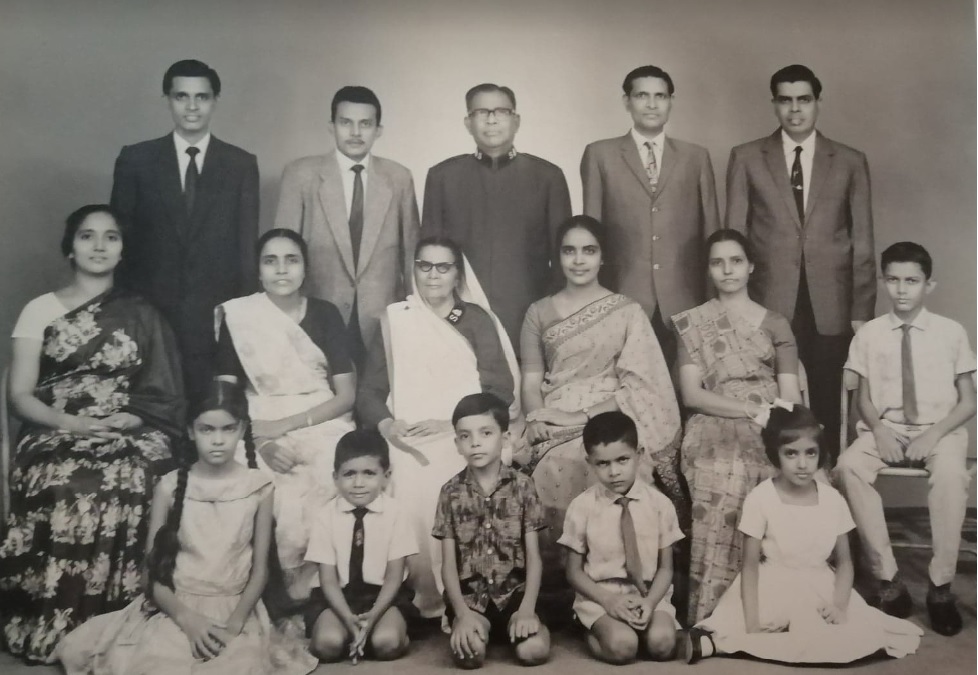
Around 1965, She decided to go to USA to pursue master’s degree in social works. The picture below was taken in Bombay when the entire family was gathered for sendoff for Aunt Eva to USA.

Standing (L to R) – Uncle Benjamin, Uncle Eric Keats, Grandpa Joseph, Uncle Phillip, Dad Daniel

Middle (L to R) – Aunt Irene, Aunt Ruby, Grandma Saguna, Aunt Eva, Mom Mili, Cousin Alan Keats

Bottom (L to R) – Sister Olive, Cousin Kevin, Ernest, Cousin Ivan (Mickey), Cousin Eunice

She arrived in Honolulu Hawaii where she spent few months working with the local Army corp.; before enrolling with The University of Washington MSW program.

Here, Aunt met Ph.D student named Kees Van Der Wekken. Later, they got married in 1970 in Seattle, Washington.

Uncle Kees worked at Boeing, specializing in metal corrosion prevention, and aunt worked in a Salvation Army Social Center, Seattle.

Later, uncle decided to switch to Academia, and they decided to move the family to Holland. Uncle retired as Professor at the Delft University of Technology.

In 1973, Evangeline and husband Kees van der Wekken, raised sufficient money in Holland, to meet a need for the Boys’ Boarding House Study Room at WILLIAM BOOTH MEMORIAL CHILDREN’S HOME ANAND, GUJARAT, INDIA.

Aunt Eva is survived by her husband Kees, daughter Ruby and son Chris, Son-in-law Mika and grand children Dahya and Jai and brother Benjamin.

Amul Cricket Club – 1975-76 Story

Featured

  • By Ernest Joseph with contributions from Mahendrabhai Seth

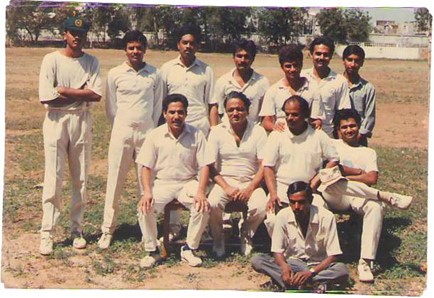
Amul Cricket club in the 70’s was very active in participation in local tournaments and Sunday matches with local teams and teams from other neighboring towns and villages. For some matches, Amul was the host at our lush green central lawn (remember?), while for some matches, we traveled together using Dairy’s Ambassador cars or even public transportation.

And my favorite part during the home games? During the lunch break, we ate Puri Bhaji (puri and dry potato bhaji) at Amul Canteen. Yum! I used to love to eat this canteen’s specialty!!

Cricket was even bigger part of my life than Badminton for a simple reason – Cricket is the passion of India and most popular sport in the country. And not to mention dressing up in clean and crisply pressed cricket whites on Sunday morning always got catcalls from ladies during those college competitions matches at university cricket tournaments.

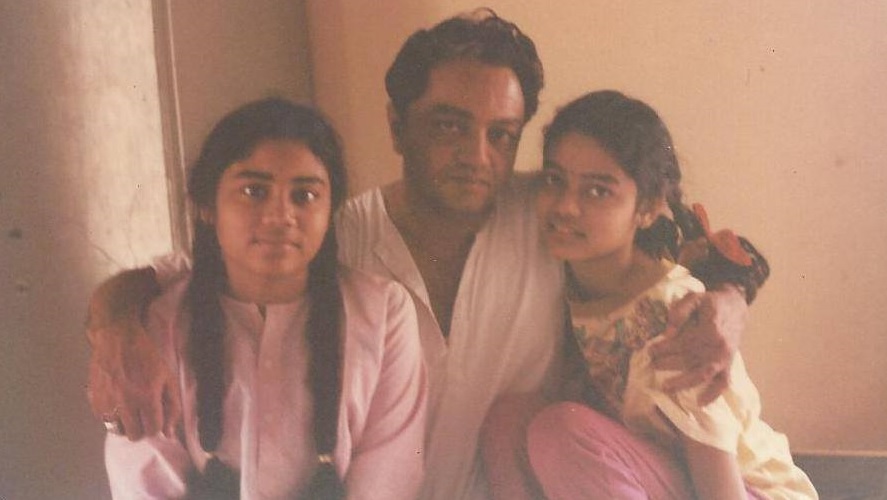
Mr. Dilip Sonalkar, our fearless leader of the Amul Club, was also the captain of the team. Dilipbhai was an opening batsman and a wicket keeper. But his role as a captain was exemplary. Personally, I was fortunate to be able to learn from Dilipbhai during my teenage years @ Amul. His encouragement to me to be developed into an all-rounder resulted in my playing on college teams of M.B. Patel Science College and J &J College of Science in Nadiad as well.

Sonalkarbhai with daughters Monica and Swapna

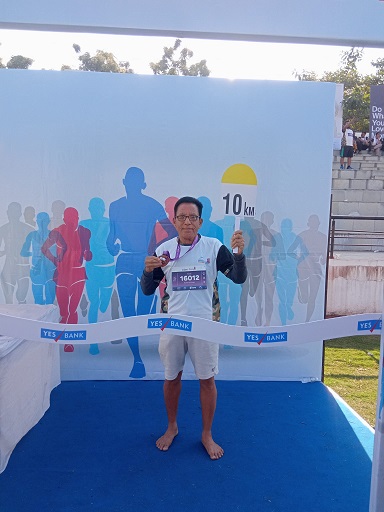
His opening partner, Mahendrabhai Seth (Shah) was an active player for Amul for almost every match we played during the 70’s. He started playing cricket at age 15, until he turned 45. Blessed to play for 30 years! Mehendrabhai is keeping his physical activities by running distances from 5K to 21K (half marathon) and has done some long distances greater than marathon over the years.

Mr. Mahendrabhai Seth at a 10K race

And, at the glamorous one down position in the batting lineup, we had our celebrity player representing Amul club – Mr. Bipin Patel. Bipinbhai played for Gujarat Ranji Trophy team as a wicket keeper and opening batsman during the 60’s. He was a textbook player as a batsman. I was able to learn a lot from him to improve my batting skills. Although his specialty was wicket keeping on defense, he always played as a fielder and allowed Dilipbhai to keep the wickets. Bipinbhai currently resides in UK.

In middle order line up, one name I remember is Mr. Suresh Joshi. Affectionally known as Joshia, he had a signature square cut drives with a flick of his wrist. Amul’s own Gundappa Vishvanath!


On the defense side, our regular opening bowlers were R.D. Patel and A.C Bhatt, and I would step in at some point while the ball was still new to back up our openers. Both worked in accounting/purchasing department od Amul. A.C. Bhatt unfortunately passed away during Covid Pandemic. His son is currently working at Amul chocolate plant.


Of course, there are 11 players on a cricket team, so there were many others in the 70’s who contributed to the team, which resulted in Amul Club’s victories in tournaments like I. B. Patel tournament hosted by ELECON Engineering, and played on their grounds, Variava cup and Summer cup tournaments which were played at Sashtri Maidan.


In 1975-76 season, I recall our match against ELECON A team in the I. B. Patel tournament. The major teams I remember participating in this tournament were of course the host ELECON and us, but also Vallabh Glass factory who had some swashbuckling players, including Satish Patel. It was always coming down to these three teams to capture the trophy.

Our match with ELECON started with ELECON winning the toss, electing to bat. One of the openers waking to take the crease was Bhanubhai Patel, founder of the company. I was fielding in the short slip position, almost breathing on his neck. Mr. Bhanubhai at that time was not a spring chicken, but of course he was a big supporter of Cricket even back than that has resulted in today’s thriving ELECON Cricket Academy with their own stadium named after Mr. Bhanubhai Patel Pavilion.

But for this match, he played just the first opening over as a ceremonious gesture to start off the match. Once he was replaced by the regular opener, soon we were off to the competition.


On this day, the pitch was favorable to spin bowlers. The ball was spinning crazy so Dilipbhai decided to put me in the attack as left arm spin bowler. As you know, by statistics, most of the batsmen are right-handed batsmen in a given team, and left arm spinner is most effective in keeping them guessing and create all short of trouble.

.
What happened next was only happens in a dream. I was able to take most of the wickets with a ridiculously low run rate average – in single digit run rate per wicket!


Next, it was our turn to bat. Yes, the wicket was still supporting spinners, so this was a close chase to get to the target. Dilipbhai was holding one end since he opened the inning, but at the other end, wickets were falling at regular interval.


When my turn came to bat down the batting order at around position 6 or 7, we had only few runs to score. Dilipbhai met me at the middle of the pitch when I entered to take the crease. His instructions were clear – “just defend the ball from hitting your pads or wicket, I will take care of the rest.”


Yes sir. I obliged. And soon, he was able to score a boundary to make our Amul Club a winner!


Wow! So awesome feeling! After the match, Dilipbhai took the entire team out to a movie “Dafli wale” at Gopal Talkies that evening to celebrate our win!

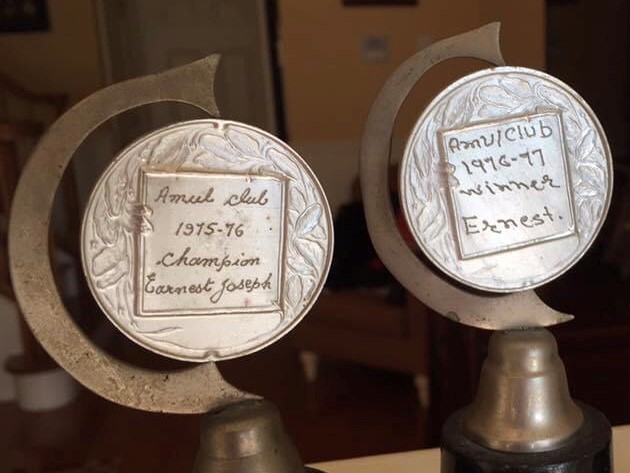
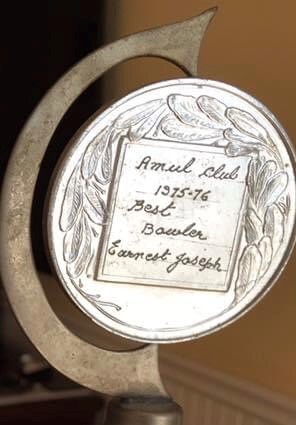
This particular year was very productive for me in the bowling department. I had taken more wickets during the year at a most economic rate. This earned me the trophy of the best bowler for 1975-76.

Well, these are mine and Mahendrabhi’s recollections from the 70’s. I had left India in September 1980, and had played my last match for the club after my marriage during one of these tournament in April or so of 1980.


But the club was still going strong. Many young kids of Amulite parents were being recruited into the Amula Cricket Club. The list is long, but we know that the younger generation was represented by Maulin Patel, Amul Sabnis, Ashok Doshi, Bhavesh Patel, Upendra Patel and many others. Bhavesh was also selected to play for Gujarat Ranji Trophy team and I am sure he must have opened many matches for Amul as the opening partner of Sonalkarbhai and Mahendrabhi.

Cricket scene has changed dramatically since then. Since 2010, Anand District Cricket Association is organizing Anand Premier League (APL). This is one of the prestigious tournaments in the Gujarat state. Anand Premier League has gifted several Ranji trophy, national Under 19 and T-20 tournament players. Notables are Akshar (Axar) Patel and Parthiv Patel under whose leadership Gujarat has won Ranji Trophy in 2016-2017 season.

Amul Club Badminton Tournament – 1977 Story

  • By Ernest Joseph

It was that time of the year again – Annual Badminton Tournament. Venue – Amul Assembly Hall. As part of Amul Parivar, Amul club organized may sports, entertainment and recreational events throughout the year. Annual Badminton tournament was one such event for all Amulites to participate.


This year’s tournament had a special meaning for me. I was THE target! Last year I had taken Men’s singles trophy, so I had to defend the title, but I was sure that couple of participants were going to make it damn hard for me to repeat. Yes, we all played this sport recreationally but some of us played competitively. Mr. H. M. Dalaya was the driving force behind Amul Badminton club and with Dalaya uncle’s support, not only we had this annual tournament, but the club also organized participation in local and regional tournaments such as Open Gujarat Badminton tournaments.


In 1976, one such participation was summer coaching camp organized by Kheda district Badminton Association, held in Vallabh Vidyanagar. Anand has history in this sport since 1970’s – Indian National Badminton championship was held in ‘76 at Vallabh Vidyanagar and Anand under guidance of Late Shree Dr. H M. Patel, then union minister of India. That year, Prakash Padukone won the single’s title for the sixth time (and went on to win 4 more). The head coach of the camp, Mr. Suresh Goel himself was national champion 5 times between 1962 to 1970. So, we were fortunate to have tutelage under Mr. Goel.

My favorite moment with Mr. Goel was during the end of the summer camp. He pulled me aside and said “I am going to recommend your name on the list of players who will represent Gujarat under-18 Team. That was the best complement I could have ever dreamt of! I then proceed to tell him that I am 19 years old, about to turn 20. He smiled and offered to treat me with pani-puri snack instead 😉

Oh yes, about the tournament. The draw was favorable in the sense that I was not going to be clashing with a competitive player until semi-finals. The first competitive match of the tournament was the quarterfinal match-up between Arun Dalaya and Yogesh Panchal, both were closely matched in their skills, and both knew each other’s game inside out. This match up was of special interest to me as I was to play semi-finals with the winner of this encounter.

Not surprisingly, the match went to full length of 3 sets with Arun coming out victorious.

OK, so my work was cut out. As I mentioned, we all played together year-round, and represented Amul in various tournaments together. So, we knew each other’s strengths as well as weaknesses. Knowing that Arun was a well-rounded player without any apparent weakness, I knew I was in for a long night.

I don’t remember who won the first set, but by end of set 2, we were tied 1-1. Needless to say, both those sets had lengthy rallies. My playing style was power play, so spending lots of energy on jumps while smashing. This was catching up with me in the third set, when I realize that the score was still tied late in the set, and my energy was sapping, I had to switch my play from power to finesse. I was able to score a point on serve with a flick of my wrist, and then proceed to win next point to close out the match. At the end, we both knew that we had left everything on the court and while only one of us was going to the next round, we both had scored victory for the sport.

Now the finals. Standing between the repeat trophy and I was N. Patanjali. Not only he was a senior player I looked up to and learned from, but he was also stronger and experienced player who will be very difficult to beat. During our participation in outside tournaments, we often paired up as men’s double team, so we knew each other’s playing style very well.

It was the final. And the assembly hall was filled. For the first time, my mom was in the audience! I was so pumped. I had to win this match for her.

As usual, I started with power play. Soon won the first set. In the second set, rallies started to grow longer, with Patanjali changing his tactics and figuring out how to keep the rallies long. Soon, he won the second set. I knew the match was going to be a 3-setter, but now I had to figure out and change my tactic and see how Patanjali will react.

I ditched the power play strategy and started playing strategic placement and making Patanjali cover the court repeatedly from front to back and side to side. Pretty soon I realized he was showing fatigue, and then I knew I just need to keep the strategy until we reach point #21.
This was the last time I had ever played in front of my mom and in the Assembly Hall. Before the time when 1978 annual tournament arrived, I had stopped playing Badminton at Amul Club and had joined Anand Gymkhana badminton club where my students from Homeopathic Medical College had membership and needed me to practice with them.

Spring Valley High School Science Honor Society – Class of 2000

Keynote Speaker – Ernest Joseph – June 2000

“Thank you Mr. Yi for your kind introduction. It is my pleasure, especially as a parent of the student of spring valley high school to address the science and Math inductees tonight. However, tonight I will be speaking to these exceptional students as a friend. That’s right, just like a friend who would share with you his experiences, I would like to share with you my experiences about what it takes to achieve academic success. I am sure this will help you in your future endeavor that lies ahead.

You have reach the stage of your life where you will soon start making choices, important choices that will shape your life as an adult and as a professional. Let me tell you my friends, from now onwards making choices becomes as routine as waking up every morning. In fact, you already have made an important choice. You have selected your career path for yourself. Being inductees tonight, you have already won confidence and approval from your teachers and parents, and respect from your peers. Making choice by yourself is often hampered by doubts and uncertainties. But today, your choice has support of your teachers, parents and peers. And that to me is most difficult mission accomplished. Now the rest is easy. The goal is set, the path is chosen, just go and get it.

Science and technology has unlimited boundaries. Based on this foundation of science and mathematics, some of you will go on to become a scientist, a teacher, an engineer, a doctor, a physicist, an astronaut ….. the possibilities are endless. If you have noticed, I said possibilities. Any of these possibilities can become reality based on the path you have chosen, but you have to get there. So how do I get there?

You have heard umpteen times from your parents and teachers about how important it is to work hard. And it is the most fundamental quality you must have to be above average, to be an honor student. This quality you have already demonstrated. But what are the other qualities that will make your goals possible?

Stay In Focus:
Never lose focus from your goal. On an average, a student who chooses the career path you have chosen, will put on 6 to 10 additional years after high school to reach the goal. You are in for a long haul and staying in focus is the key to success. By staying in focus, it reminds you of your priorities and helps you accomplish your goal. I always compare this with running a marathon. Just a thought of completing one might make you want to quit, but if you stay focused, you know you will reach the finish line and it will be over soon.

Develop inquisitive mind:
This is the one significant quality that attributes to most of the major breakthroughs in science. Remember, no question ever asked is silly question and therefore, never be afraid to ask. In yesterday’s New York Times, there was a front page article on drugs called angiostatin and endostatin, the drugs that eradicate tumors in mice. It will be at least a year before we know how the tumor in humans responds to these drugs. Dr. Falkman, the inventor was obsessed with this idea but rather unpractical notion that cancer cannot grow beyond the size of a pinhead unless they have their own blood supply. If he could block the tumor’s blood supply, he reasoned, the tumor should shrink to the miniscule size. 30 years ago, when he proposed this notion, he did not have many believers. Now, as Dr. Watson, a Nobel prize winner and a director of cold spring harbor laboratories in long island puts it. “Dr. Falkman will cure cancer in two years. And he will be remembered along with Charles Darwin as someone who permanently altered the civilization”. Pretty profound words.

Be a Dreamer:
To make dreams come true, you must be able to dream. In the 60’s when president Kennedy announced that we will put man on the moon by the end of the decade, he had shown full confidence in the dreamers who happened to run an agency called NASA. All the big inventions that change lifestyle dramatically, starts with a dream. The inventor of polymerase chain reaction, PCR for short, had this idea while driving on route 101 on the coastal California. He stopped and made notes of his ideas. The rest is history. With PCR, exponential quantities of DNA can be made in 1 hour that would take days by conventional methods. Thanks to this invention, Human genome project is possible. This project is carried out in dozens of labs around the world with single goal of mapping the entire human genomic sequence in mind, therefore to know exactly what we are made up of right down to the molecular level and even more importantly, which genes are responsible for various diseases.

Be persistent:
Without being persistent, none of the above qualities mean anything. There will be enough share of disappointments along the way, but persistence will get you there. In science I do not like to use word failure because in scientific research, there are no failed experiments. What happens is that cumulatively, all experiments will lead to the successful one. As Winston Churchill once said, and great basketball coach Jimmy Valvano used to say to his team – “Never give up, never ever give up”.

Always Watch, Listen and Understand:
These are the simple qualities of life we take for granted, but often underestimate. Alexander Graham Bell, the inventor of telephone, devoted his life working with and understanding deaf. Both his mother and wife had hearing impairments. By understanding them, he gathered knowledge of the shapes of sound waves that lead him to the basic principle of telephony.


Read:
In these days of television and other electronics means, reading seems to be a forgotten art. When I say reading, I do not mean just your textbooks. I am a firm believer that something you read somewhere never goes to waste. All readings put together makes you a well-rounded person.

So just to summarize, stay focused, develop inquisitive mind, Be a Dreamer, Be persistent, watch listen and understand and Read.

So now you may ask “what are my career choices in the next millennium?” There are always the old favorite ones like a doctor, a nurse or a teacher. But there are also emerging fields of genetics, genetic counselling, computer science, robotics…. And list goes on. These are some of the cool things happening! You have a wonderful opportunity to participate and may even become a trend setter for the next generation. Whatever you choose, choose because you love to do that, and not because everyone else is doing it. This will help you tremendously in your professional life later on, may be 20 or 30 years later, when you wake up each morning, you will have same enthusiasm to look forward to for the day because you will be doing something you love, and not because you have to.

I congratulate you all and wish you all the best. Thank you.”

Ernest Joseph

Background – Undergraduate degree in Microbiology from India and graduate degree in Immunology from New York medical college.

Past & Current Work – Past research includes development of Immunoassays to detect colon cancer, prostate cancer and neural tube defect.

Working as a researcher in the field of diagnostics at Bayer corporation. Present work involves development of Immunoassays to detect infectious Diseases.

Professional Affiliation – American Society of Microbiologists
American Society of Clinical Chemistry

Remembering 9/11/2001

By Ernest Joseph – Written as Christmas letter 2001

Season’s greetings! May your holiday season be filled with Happiness and Joy.

It’s that time of the year again and Joseph family generic Christmas letter is in your hands! What a year it has been!

At times it seemed flying by, and after September 11th, it seems like a whole another year. Collectively, life has come back to normal in a way, but the “normal” is not same as September 10th and before.

September 11th started out to be a beautiful fall day, clear blue skies and temperature in mid 60’s F. I was at work in a meeting. As we came out a meeting around 10:00 AM, our secretary informed us that a plane had crashed into world trade center. Knowing that lower Manhattan is a no-fly zone, I thought it must be a small corporate plane gone astray and how ignorant of this pilot for not being able to avoid the tower.

Anju was at her work in Clifton, NJ, only few miles away from Manhattan and with clear view of the skyline. What we were watching on TV at work, Anju was witnessing it from her office roof top. At this point, we realized that almost everyone knew someone who worked at World Trade center.

Anju’s colleague Viki’s husband worked on 10th floor of the tower, but she could not reach him over the phone. When towers collapsed, she was hysterical, still unable to contact him. Fortunately, he was late getting to work and did not even make it to the subway station under the towers.

Sushil Solanki, a close friend of Ajay (Anju’s cousin) and a member of the bridal party at Ajay’s wedding, worked at Cantor Fitzgerald on 102nd floor and was not able to get out of the building. He leaves behind two children under 5 year’s age. Anita was at school and although students were informed about the terror, the school remained in full day session.

That evening, we had few fly-over visits from F-16 fighter planes which reminded me of being in Anand during 1970 war with Pakistan.

But we must also remember HIS blessings and focus on good things that has happened during the year.

Ami is now a sophomore and she seem to be getting serious about achieving her goals at University of Michigan. Although winter is longer and brings frequent snow due to great lake region, she has adopted to the place very well. She will be flying home on 20th for Christmas.

Anita is a freshman in high school, and in transition from parochial to public school system. She has made some friends and seems to have completed this transition smoothly. This will be her 10th year with Dance school and she has a lead role of Billy in the musical “42nd Street”.

Anju had an opportunity to visit her parent company Twinings in London, attending a seminar. Anju’s  parents and other family members are all doing fine. Joy has passed her physician’s exam which will allow her to practice on her own.

Dadi, Dad and Mom are doing very well. Since Dadi’s arrival in NY, Sunday after church visit to their homes has become our routine. Dadi amuses us with stories from the past, and never fails to mention about 5 car accidents she was involved in, which of course is always the reason behind few aches and pains she suffers once in a while.

Since 1986, my running goal was to run Boston Marathon, which requires meeting strict qualifying times for the age group. Finally at Jersey shore marathon, I barely qualified for Boston by running 3:22:01 marathon (needed 3:25:00 or less). It was a great experience in April as I ran my first Boston.

If you would like to read more about it, please visit: http://www.angelfire.com/ny5/corprace/Essays.html.

Finally, we must have some Christmas Humor, so here it goes:

The 3 stages of man’s life:

During first stage, He believes in Santa Claus.

During second stage, He doesn’t believe in Santa Claus.

During third stage, He is Santa Claus.

Love Always,

Anju, Ernest, Amrita and Anita – Christmas 2001

Mental Training for Marathon

By Ernest Joseph – 2005

Proper physical, nutritional and psychological training leads to a peak marathon performance. For most of us, marathon is a way to test our ability to push beyond the limits. The mind can have a great influence in pulling our body beyond its limits. But the mind can also have a great influence in pulling our body away from our abilities and force us into disappointing performance. Such negativity may cause us to believe we are not capable of executing our game plan.

So how to really train our mind for a marathon? It is only logical that if the runner encounters adversities during training runs and trains mind to handle the adversity, then the runner can apply that training effectively during the race. I find the following steps useful in mental training for a marathon.

Sticking with the goal – If you have decided to run a marathon, then run it. Barring injury, there is no plan B as far as to run or not to run. This commitment not only motivates the runners out of the bed for training during cold winter and hot-humid summer days, but also trains their minds to believe that the decision to run the upcoming marathon is non-negotiable. If the training was not good enough to achieve the goal that was set up at the beginning of the training program, then run within the limitation. This is the fundamental step to the mental training. This develops a positive attitude throughout training period and when the going gets tough in the race, the mind will be focused on how to finish and not on whether to finish.

Sticking with training schedule – If today is the training day of the week, then train. If the weather is extreme, modify the training but do not modify the schedule. This commitment to training will train the runner’s mind to run with confidence if the marathon day brings rain, cold, hot or humid weather.

Understanding and accepting marathon associated pain– 2:08:00 or 8:02:00 marathoners will be left with common phenomenon of fatigue and inflammation of the joints at the end of a marathon. This is a normal physiological phenomenon associated with prolonged exercise such as marathon, so accept it. It is the ability to overcome or deal with the pain at this point in the race that will be the difference between peak and mediocre performance. Pain is part of the marathon. Deal with it in the training and get it out of the system.

Dealing with pain – An optimal pace will help achieve peak performance. An above-optimal effort will produce lactic acid build-up faster than the body can break it down, resulting in fatigue and pain. But if running at optimal pace were as simple as it sounds, runners would never encounter “the wall” during the marathon. The wall is a state of mind as well as a state of body. As the pace slows and running becomes more difficult, the mind has a tendency to worry and focus on negative possibilities. When runners begin to panic and the fatigue escalates, soon the word “stop” enters their mind. That’s “the wall.” During long training runs when pain and fatigue set in towards the end, try not to fight it, but accept it and continue running. This will train the mind to relax rather than panic at the onset of pain, and relaxed mind will provide positive attitude. Psychologists say that the left side of the brain, which is the logical side, comes to life when we are under stress. It can come up with a million reasons why we do not want to continue. But if we can relax during this initial stage, the right side of the brain; which is full of creative solutions to almost any problem the left side can come up with, gets a chance. If the runner can just relax and accept the situation, the right brain can take over and get the mind off of those tight muscles, fatigue and negative left-brain messages. Maintaining positive thinking – Once relaxed and accepting of the situation, find ways to stay positive. Draw positive energy from the surrounding. During training, take the mind off the fatigue and pain by talking with the running partner about positive things. If going solo, visualize positive and inspirational thoughts.

But the important thing is; during the training run when the going gets tough, keep going because this is the most valuable mental training you will ever receive on the pain management. During the race, feed on the crowd’s support. Get involved with the crowd. Read those inspirational signs on the course. And if you ever encounter the wall, please remember that walls do have windows.

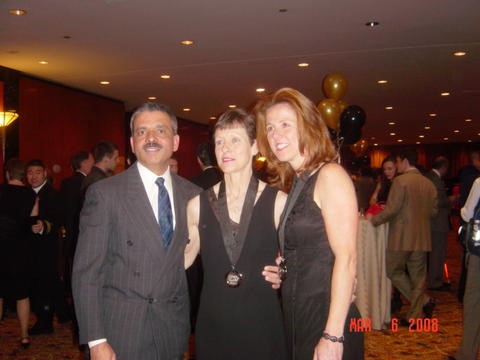
DiMarino and Patten Honored by NYRR

By Ernest Joseph – 2008 (Published in NYRR Magazine)

New City resident Laura DiMarino received word of her nomination for age group runner of the year in 40-44 age division and will be honored by New York Road Runners at their 51st Annual Awards Ceremony next month. The 42 year old mother of three was also nominated for the 2007 season and has been one of the area’s top masters runners.

Each year NYRR nominates runners based on their best performances for the year. These rankings, through the top 20 in each age group, are reviewed by the Awards Committee with special consideration made for head-to-head competition and performances at a range of distances. The Awards Committee is comprised of NYRR staff and Board of Directors members and team representatives from the local running community.

With another exciting year of top-notch competition on the local running scene nominees for the 2008 Runners of the Year awards helped make last year one of the best in NYRR history. The New York area is home to an abundance of running clubs. New York Road Runners serves as an umbrella organization for local clubs and encourages competition among clubs at NYRR races.

DiMarino who runs competitively for Running Divas New York will join her teammates on the podium excepting the trophy for winning the Women’s Masters Division Championship. Team founder and coach, Gordon Bakoulis, who was also nominated in her division this year, joins five other Divas on the elite list of nominees. DiMarino who competed in the New York City Marathon helped her team secure 3rd place overall in the Open Women’s Division of the marathon. DiMarino posted a half marathon personal best of 1:25:40, a 6:30 per mile pace over the 13.1 distance. She also earned a bronze medal in the prestigious Continental Fifth Avenue Mile with an impressive 5:22.4 effort.

DiMarino served for two years as President of Rockland Road Runners and along with Ernest Joseph (Vice President), founded their competitive team. She was RRR’s top athlete for the three year period and helped them establish themselves in the local competitive racing community. DiMarino and Josephine Patten are the only Rockland County resident to receive a nomination for the 2008 season.